
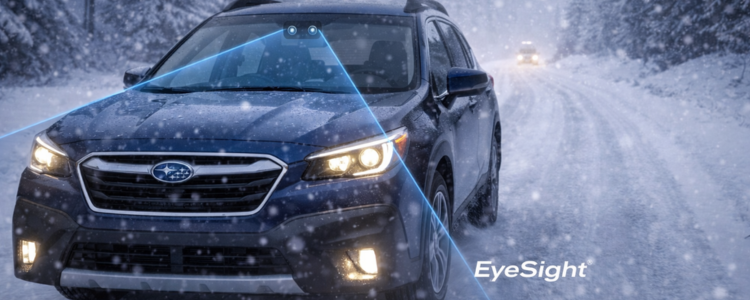
Winter is one of the most dangerous driving seasons of the year. Snow, ice, early darkness, and unpredictable storms can quickly create stressful conditions. That’s why Subaru offers EyeSight® Driver Assist Technology, a system designed to help keep drivers safer and more aware when hazards appear.
But many Subaru shoppers ask an important question: How does EyeSight® perform in winter weather?
How EyeSight® Works
EyeSight® uses dual forward-facing cameras near the rearview mirror to monitor the road. It can detect vehicles, lane markings, and movement ahead to provide driver support and safety alerts.
In winter, those cameras are still working—but like your own eyes, they rely on visibility through the windshield.
Winter Features That Help Most
EyeSight® can support winter driving in several key ways:
✅ Adaptive Cruise Control
Maintains distance even when vehicles slow suddenly on slick roads.
✅ Pre-Collision Braking
Can help reduce impact or stop the vehicle if a collision is likely.
✅ Lane Departure Warning & Lane Keep Assist
Helps you stay centered when visibility is reduced.
✅ Lead Vehicle Start Alert
Helpful in snowy traffic when stop-and-go driving is common.
What EyeSight® Can’t Do
EyeSight® isn’t meant to replace driver attention. During extreme weather—heavy snow, ice-covered windshields, or fog so thick the cameras can’t see—the system may temporarily disable itself and notify the driver.
That’s normal and designed for safety.
How to Keep EyeSight® Working Well in Winter
To ensure EyeSight® performs at its best:
- Keep the windshield clear and defrosted
- Replace wiper blades as needed
- Avoid windshield stickers near camera zones
- Clear snow and ice before driving
The Bottom Line
EyeSight® adds powerful protection during winter driving, especially during heavy traffic, slippery braking, and reduced visibility. Combined with Subaru’s AWD and stability engineering, it’s one more reason Subaru vehicles are trusted in harsh Midwest winters.
Connect with us


- July 2026
- June 2026
- May 2026
- March 2026
- February 2026
- January 2026
- December 2025
- November 2025
- August 2025
- July 2025
- June 2025
- May 2025
- April 2025
- March 2025
- January 2025
- December 2024
- October 2024
- February 2024
- October 2023
- September 2023
- August 2023
- July 2023
- June 2023
- May 2023
- March 2023
- February 2023
- January 2023
- December 2022
- November 2022
- October 2022
- September 2022
- August 2022
- July 2022
- June 2022
Archives
- Ascent
- Community Events
- Crosstrek
- Dear Subaru Campaign
- Forester
- Impreza
- local adventure
- Maintenance & Service
- Milwaukee Subaru Dealer
- Milwaukee Subaru Service
- Milwaukee Used Cars
- New Inventory
- Parts Department
- Solterra
- Subaru City of Milwaukee Service
- Subaru Outback
- Subaru Ownership
- Summer
- Tips
- Uncategorized
- Used Inventory
- Winter Driving
- WRX
Categories